


- After surviving a horrible car accident, Carol learned she was paralysed from the neck down
- She and her husband had already been told they had fertility troubles and were devastated to realise their dream of starting a family were shattered
- Treatment helped Carol gain some movement in her arm and later, she underwent IVF
- Over the next few years, they had 15 embryo transfers but sadly none worked until one day, they discovered they’d conceived the old-fashioned way
- After welcoming her miracle son, Carol got back into art and later turned to the fashion world, designing stylish clothes for people with disabilities
- Carol Taylor shares her story of heartbreak and triumph…
As my husband Rob opened the front door to our home and light flooded into the hallway, I noticed little dents in the wooden floorboards and started to cry.
“I’m sorry,” I said, wiping my eyes.
It was always the little, unexpected things that got me.
The marks had been made by the high-heeled stilettos I’d loved to wear every day.
Now, I knew I’d never wear them again.
Read more: Pregnant mum told to abort her baby
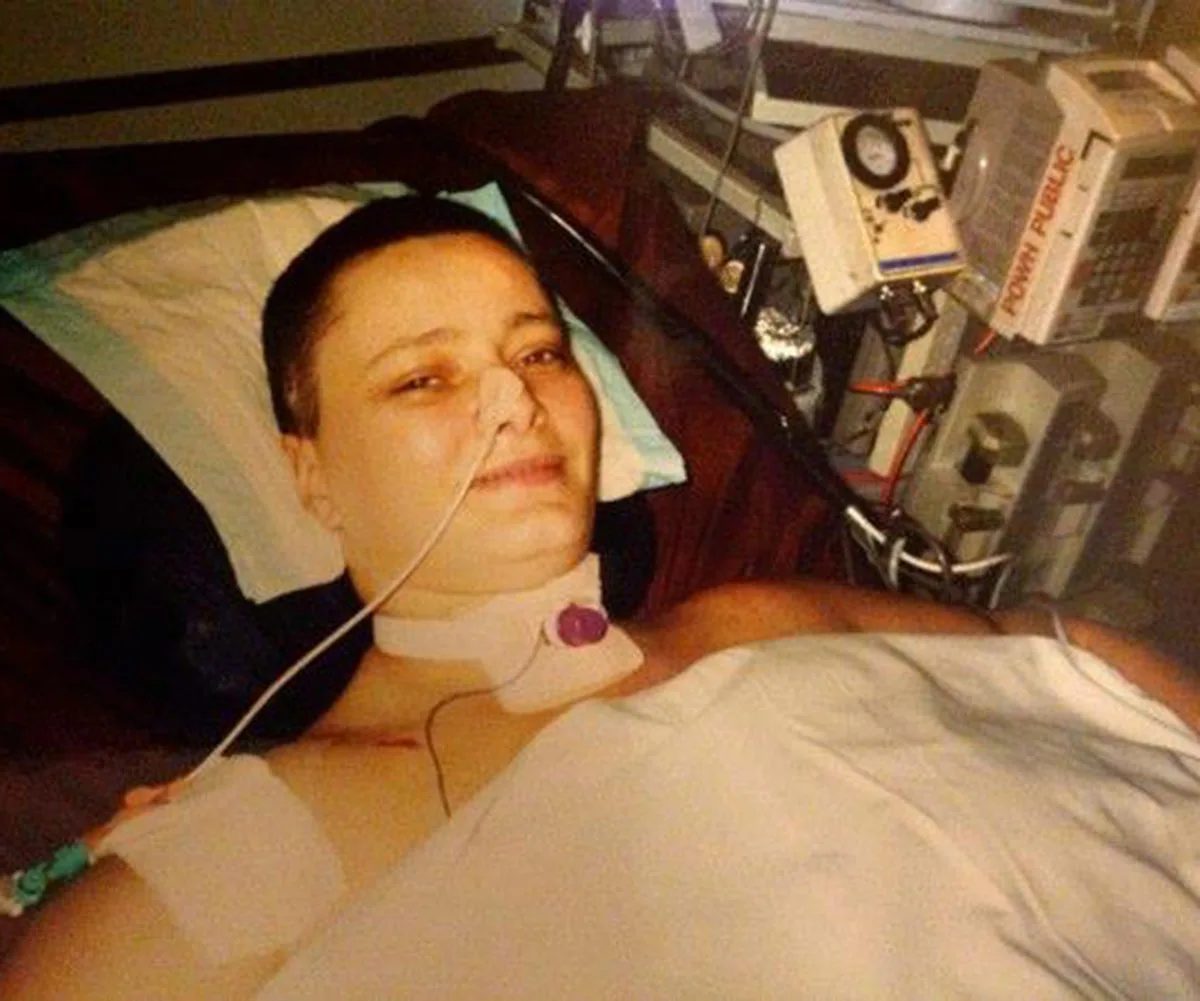
A year earlier, in 2001, Rob and I were driving home from a weekend away when our car hit black ice, rolling over, the roof caving in.
I couldn’t feel anything from the neck down and knew immediately what it meant.
At hospital, I was put into an induced coma and on life support.
When I woke, the doctor came to see me.
“I’m afraid your spinal cord was severed,” he said. “You’re completely paralysed from the neck down.”
I’d never walk again.
For two months, I couldn’t speak and had to blink letters of the alphabet to communicate.
When I eventually got my voice back, I had only one question for the doctor.
“Will I ever be able to have a baby?” I choked.
The answer was a resounding no.
Prior to the accident, we’d already been diagnosed with fertility issues. Now, with the added complication of my quadriplegia, our dream of becoming parents were shattered.
Aged 34, I felt like I’d lost everything and asked my husband for a divorce.
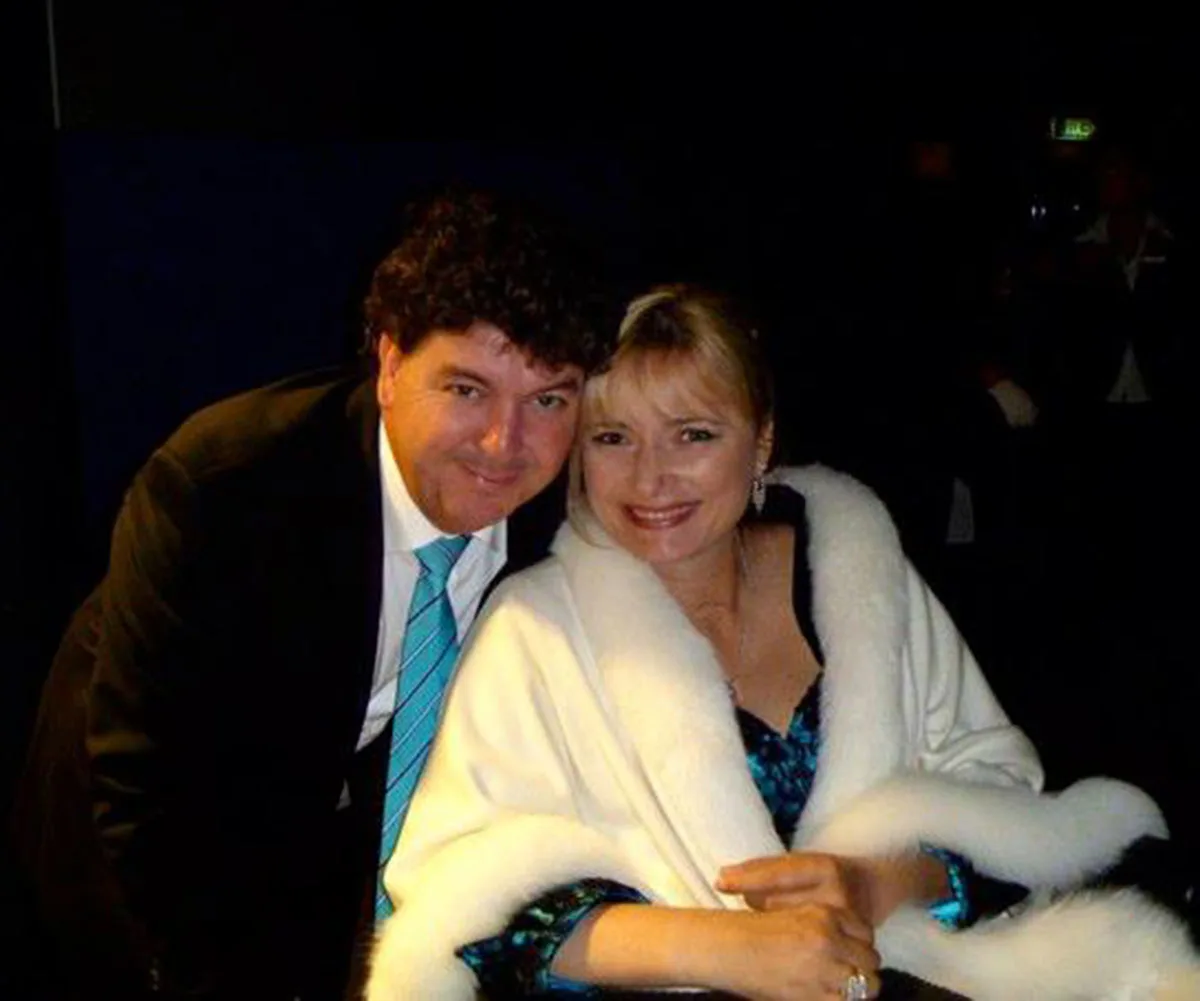
But Rob refused and stayed by my side as I spent the next year in hospital recovering.
My treatment included having an injection of a new steroid into my spinal cord which gave me back some arm movement, and learning how to use a wheelchair.
I was relieved when I was finally allowed home but I was also deeply depressed – and things like dent marks from shoes I’d never wear again was enough to set me off.
In time, Rob recognised that I needed a creative outlet. He bought me a set of paint brushes and modified them, so the brushes could be attached to my hands.
Despite my limited movement, I taught myself to paint using books, DVDs, and eventually art classes.
It became a form of therapy and slowly I started to feel better.
Amazed at what I’d achieved, I decided I wouldn’t take ‘no’ for an answer anymore.
I was determined to have a baby at all costs, and Rob was onboard.
Over the next few years, we were consumed by it. We had 15 embryo transfers in total, each failure or miscarriage more heartbreaking than the last.
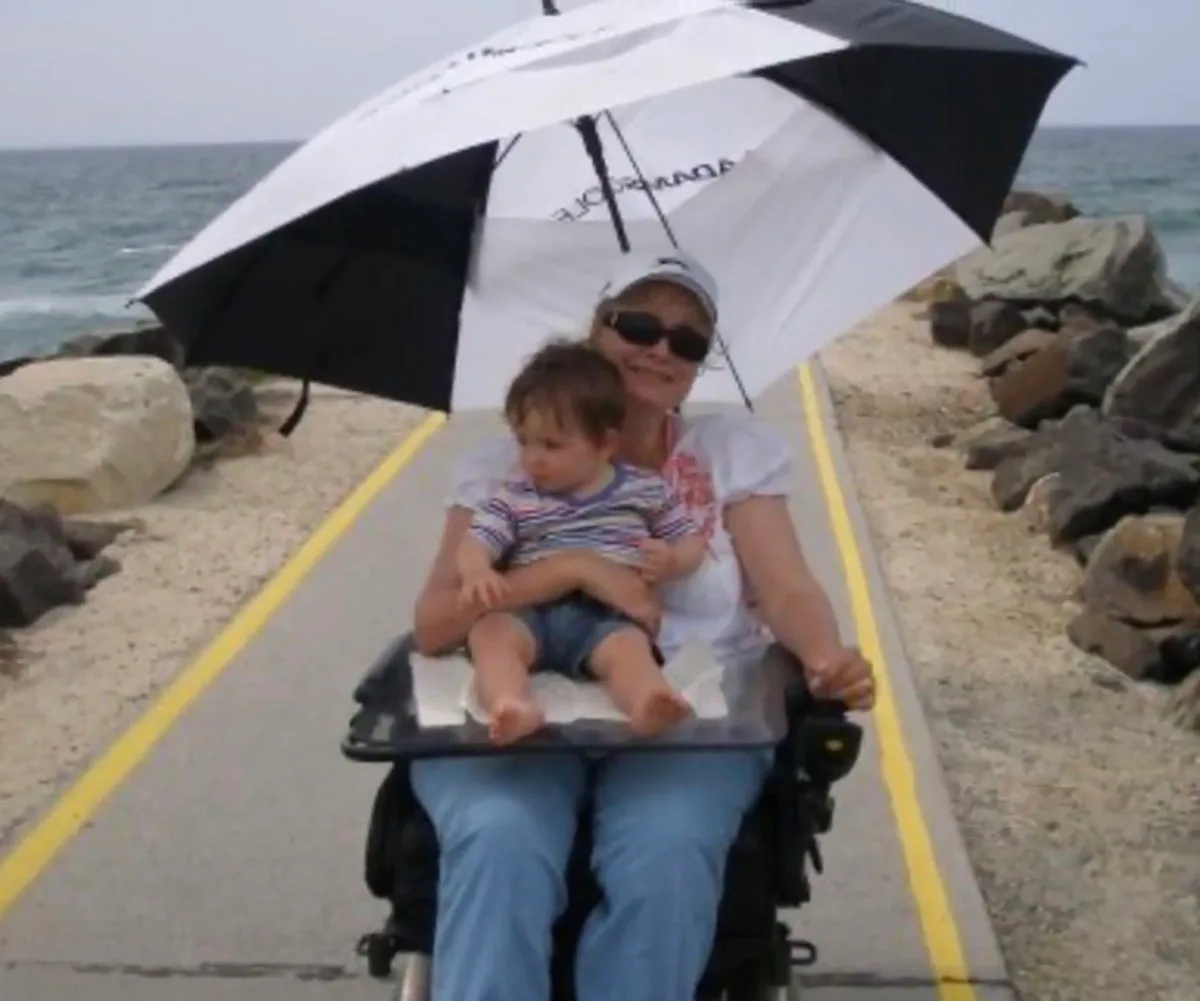
But then, one day, we found out I was expecting – and it had happened the good old-fashioned way!
I had to stay in bed for five straight months to carry our baby to 37 weeks. Our son D’arcy was brought into the world three weeks early in November 2006 by a team of 12 medical staff, who took good care of us both.
“He’s our miracle,” Rob said.
He really was.
Parenting with a disability wasn’t easy, but like with so many other challenges, I overcame it. A nanny helped with dressing and bathing D’arcy, but I did as much as possible myself.
By the time D’arcy was eight, I had a bit more time for myself and decided to set up my own law practise again.
I had to learn all the new technology that had advanced since the accident and I took the Qld Law Society course orally, to regain my legal practice certificate.
I also continued to paint, donating my art at auctions to raise money for spinal cord research, and in 2018, I even won the Access Arts Achievement Award, which came with a prize of $10,000.
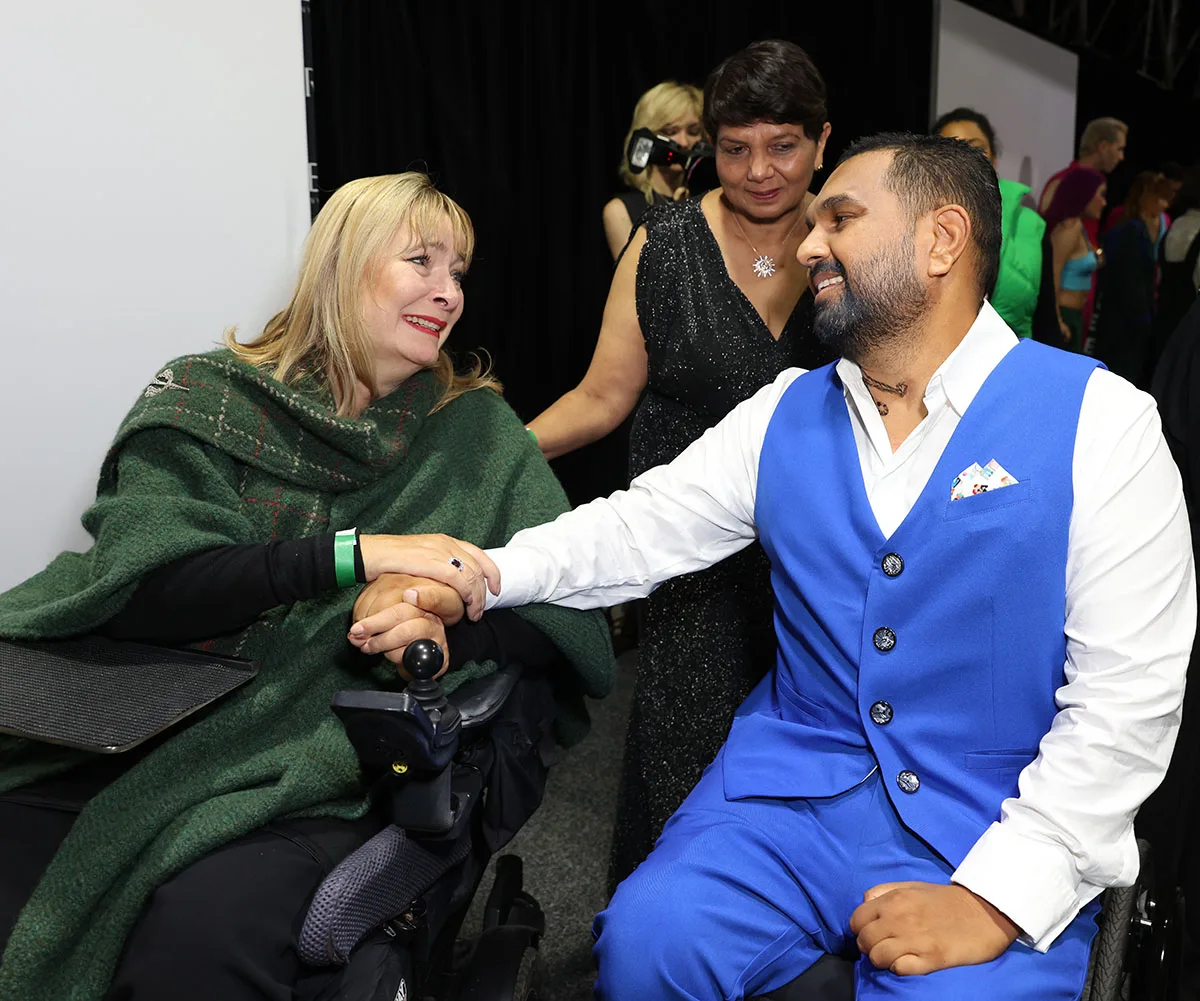
With my newfound confidence, I decided to address a grievance I’d had since the very first day I’d started to use a wheelchair.
I’d always loved fashion, and it bothered me that the ‘easiest’ thing for me to wear now was a tracksuit and runners.
“I don’t want to wear the easiest thing,” I told Rob. “I want to look fabulous!”
It was unfair that people like me were consistently left out of the style conversation.
The garments made for us were functional, not fashionable, and were designed with the carer, rather than the wearer in mind.
All that seemed to matter was that clothes were easy for someone else to put on me!
Deciding to change that, I began designing my own clothes then engaged a dressmaker to create the outfits for me.
“I want others to feel this empowered,” I told Rob.
I wanted to design stylish clothes for people with disabilities. It was a virtually untapped market – and a big one too, with one in five Australians having a disability.
As my friend Lisa, who is also disabled often says, “My legs might not work, but my credit card sure does!”
I was about to launch my own fashion label, Carol Taylor Designs, when I was approached by Jessie Sadler, CEO and founder of the Christina Stephens adaptive clothing label, who asked me to join her
in partnership and be the lead designer.
Our mission was to bring adaptive fashion to the mainstream – and boy have we done that!
Our designs have been picked up by the online retailer, The Iconic, and in 2022 were showcased at Australian Fashion Week’s first adaptive runway in Sydney.
I couldn’t be prouder.
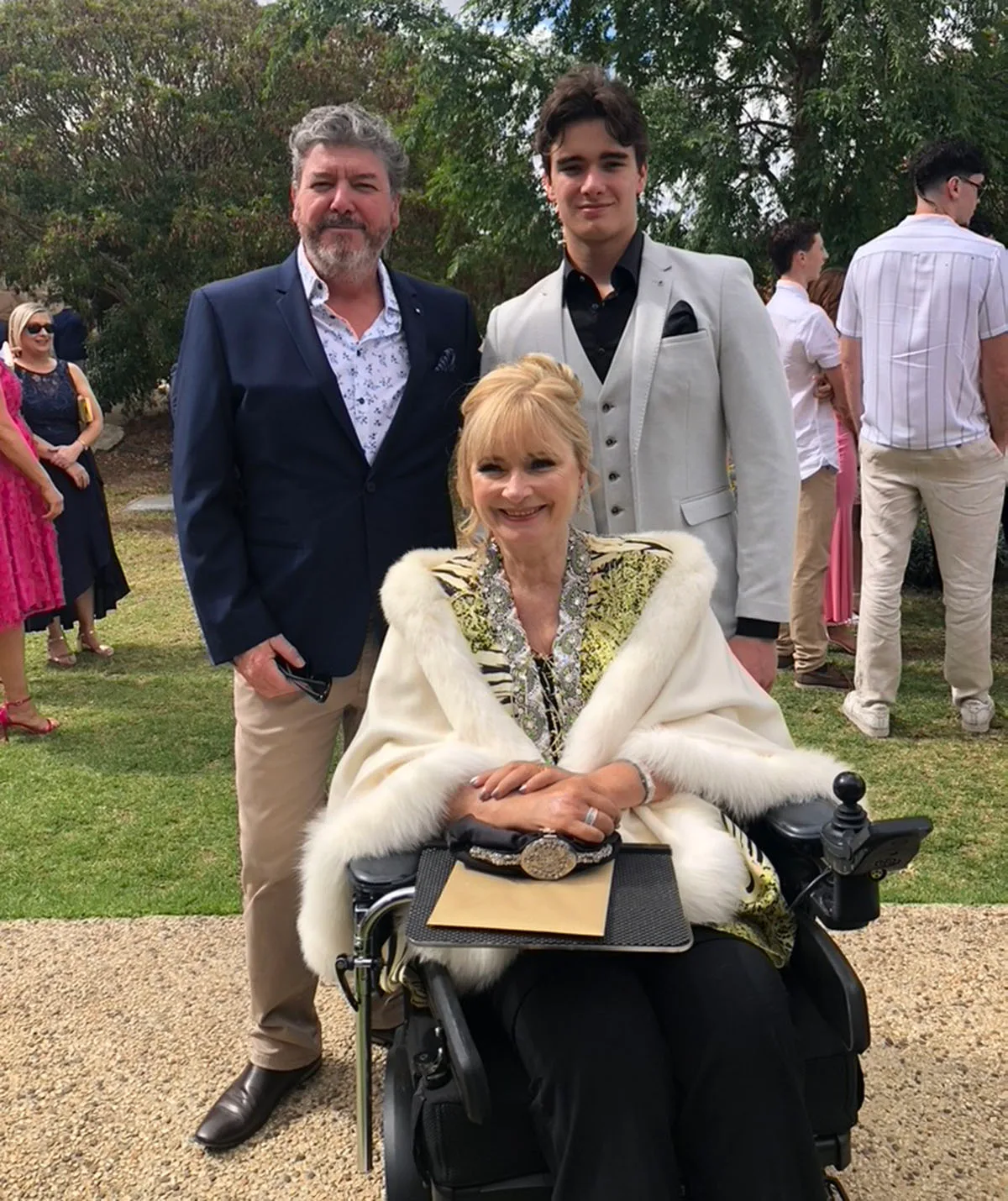
But my proudest achievement, of course, is my son. D’arcy is now 17. Growing up with a disabled mum has given him a great sense of social conscience and heaps of empathy.
He loves to sing, hang out with his girlfriend Mollie, and is thinking about studying law when he goes to uni.
If there is one thing I’ve taught him it’s that anything’s possible – no matter what challenges you might face.
I might be on wheels, but I’m always moving forward.

